World Cup Ball Performance Debunked by Physics Expert
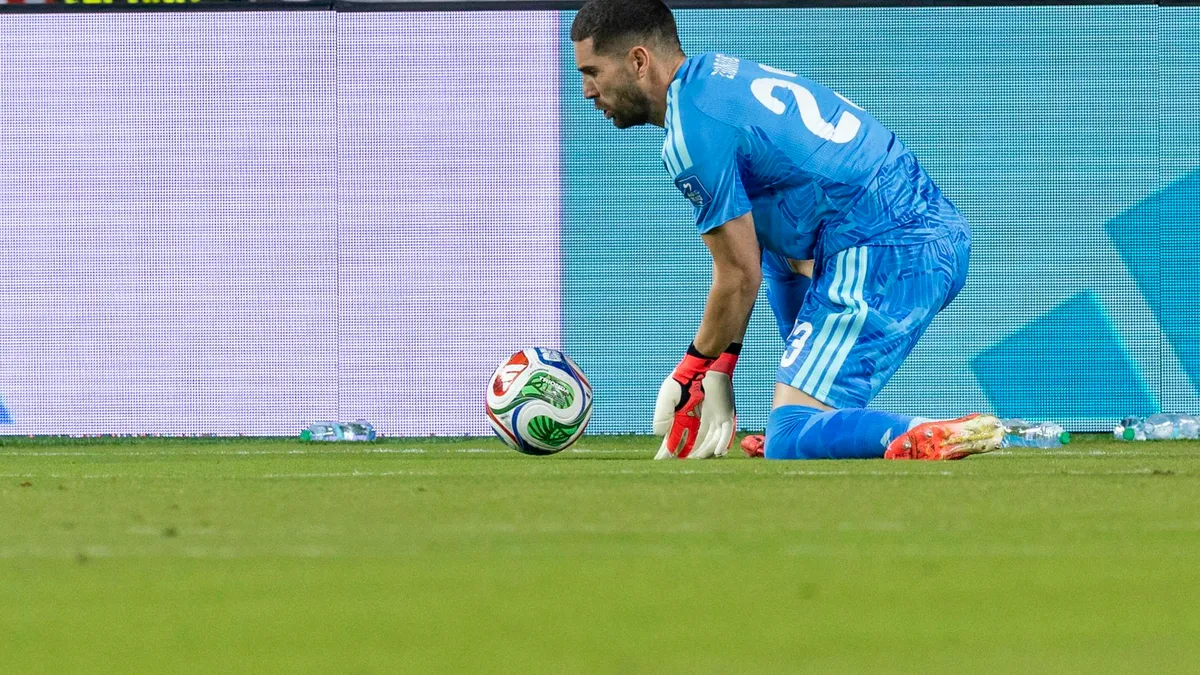
Concerns from some goalkeepers regarding the speed and unpredictability of the Trionda ball at the World Cup have been addressed by a physicist who conducted tests on its performance.
Claims that the Trionda ball, currently in use at the World Cup, is excessively fast or flies erratically have been examined and largely refuted by scientific analysis. The discussion has been prominent among some goalkeepers who expressed their reservations about the ball's behaviour during matches.
To investigate these assertions, an independent physicist undertook a series of tests designed to evaluate the ball's aerodynamic properties. The findings from these experiments aim to provide an objective perspective on whether the ball's trajectory deviates significantly from expected norms or exceeds acceptable parameters for professional football.
The results of the testing suggest that the Trionda ball performs within the expected range for a modern football, a conclusion that contrasts with some anecdotal evidence and player opinions. This scientific evaluation offers a counterpoint to the subjective experiences of those on the field, grounding the debate in empirical data rather than solely on perception.
Goalkeepers griping about the ball's flight are likely experiencing a classic case of "new ball syndrome," a phenomenon as old as the game itself. Physics doesn't lie, and the Trionda appears to be just another football.